



Blogs
[MARKET NEWS] THE OFFICE REAL ESTATE MARKET AND MAJOR CHANGES AFTER THE PANDEMIC
The complex developments of the COVID-19 pandemic have significantly affected the office leasing market. As the economy recovers, businesses resume operations, and society adapts to the new normal, how will the office leasing market evolve?
According to experts, since the first quarter of 2022, the office market has shown several positive signs following more than two years of pandemic-related disruptions. Occupancy rates have begun to rise, office rental prices have gradually stabilized, and demand for office expansion has made a strong comeback. To better understand the market, here are some analyses and forecasts from industry experts and market research organizations:
Offices Need More Amenities
According to Ms. Trang Bùi, General Manager of Cushman & Wakefield Vietnam, flexible working models are making it easier for many businesses to recruit talented employees. Geographical distance is no longer the most important factor for either employees or tenants. Related expenses, such as housing and transportation allowances, can also be significantly reduced. Moreover, with rising fuel prices and persistent rush-hour traffic congestion around office hubs in city centers, flexible working arrangements have become more attractive than ever.
“Although many of our clients have found that remote working has not reduced employee productivity, they still believe that, in the long term, increased remote working could affect productivity, corporate culture, innovation, and creativity. Remote working is also much more challenging for new and junior employees, who need time to interact with colleagues, integrate into the company community, and receive direct guidance from their supervisors. Working from home is particularly difficult for large families or those living in limited spaces in major cities. Many people simply do not have a dedicated workspace at home,” Ms. Trang shared.
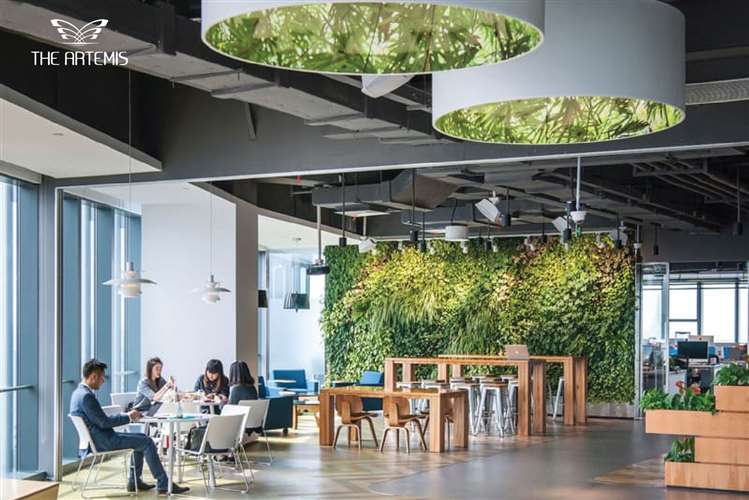
The challenge for office landlords and tenants is how to encourage employees to return to the workplace when their expectations now extend beyond a Grade A office building with impressive views. Employees also want convenient parking, wellness facilities such as gyms and spas, diverse retail and dining options, and green spaces such as parks, rooftop gardens, or plants within the office itself to create a comfortable working environment. Some companies with large workforces have introduced in-house cafeterias serving food and beverages, an initiative that has received strong support from employees.
We have observed that hybrid working arrangements, where employees spend part of the week in the office, are becoming increasingly common, particularly among e-commerce businesses. In addition, companies in Vietnam are placing greater emphasis on creating diverse workspaces, such as individual booths for employees who need to concentrate, long shared tables in flexible spaces to encourage collaboration and interaction between teams, and recreational and wellness facilities such as gyms and relaxation rooms.
For businesses, the office has become an essential tool for attracting and retaining talent, as well as communicating the company's brand identity and corporate culture.
“The challenges brought about by the global pandemic have required employees and organizations to adapt in order to retain talent and encourage people to return to the office. The workplace of the future will be an ecosystem offering employees a wider range of choices, from workspace types and working hours to the amenities surrounding the office,” the Cushman & Wakefield expert concluded.
Information and Communications Technology Companies Drive Growing Demand for Office Space
Ms. Hoàng Nguyệt Minh, Senior Director of Commercial Leasing at Savills Hanoi, stated that the rapid growth of the information and communications technology (ICT) industry will lead to increasing demand for office expansion. This trend is becoming evident in both of Vietnam's major markets, Hanoi and Ho Chi Minh City.
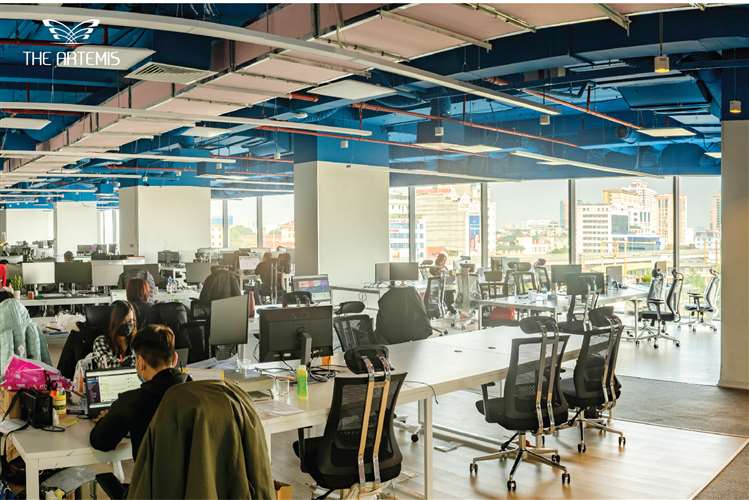
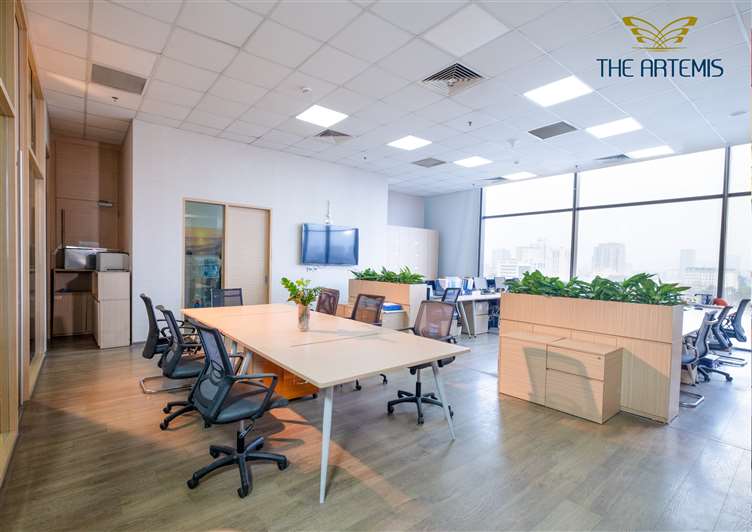
Technology company office at Artemis Tower
Technology company office at Artemis Tower
In the first quarter of 2022 alone, ICT companies were among the leading sectors in office space absorption. In Hanoi, the sector accounted for 16% of the leasing market, making it one of the largest tenant groups. Statistics from Ho Chi Minh City showed that ICT companies accounted for 54% of newly leased office space, far exceeding distribution companies (17%) and the finance, banking, and insurance sector (14%).
“Office supply remains abundant and is distributed across different areas of the city. We have observed that most major domestic and international ICT companies are concentrated in western Hanoi. Compared with central districts such as Hoan Kiem, offices in western districts such as Cau Giay offer more reasonable rental rates and larger average floor areas.
This makes it easier for ICT companies to design and manage their office layouts while providing room for future business expansion. Similarly, in Ho Chi Minh City, companies in this sector tend to seek locations outside the city center, particularly in emerging urban areas such as District 2 and District 7,” Ms. Minh explained.
Ms. Minh further noted that the ICT industry has specific operational requirements involving complex machinery and technical equipment. As a result, businesses in this sector often set strict requirements for the technical specifications of office buildings.
Typically, these companies look for properties with high floor loading capacities that meet the necessary standards for server rooms. These rooms house a significant amount of valuable business assets, making them one of the key considerations when selecting office space.
In addition, a building's electrical distribution systems and generators must provide sufficient capacity to maintain stable business operations. Companies in this sector consume substantial amounts of electricity. For this reason, ICT businesses tend to seek offices in buildings developed according to green building standards. Given their high daily energy consumption, green office buildings can help minimize the environmental impact of business operations.
“Based on these specific technical requirements, we have observed that ICT companies tend to prioritize Grade A office properties. Developed by reputable and experienced investors, these projects are generally well-equipped to meet the conditions businesses require. In contrast, companies with less demanding requirements often turn to Grade B office buildings, which offer more affordable rental rates,” the Savills expert explained.
Green Offices Are Becoming Increasingly Popular
Ms. Nguyễn Hoài An, Director of CBRE Hanoi, noted that the return to normal business activities, including the gradual removal of restrictions on business and social activities and the reopening of international flights, has brought positive signals and renewed confidence to the office market.
As a result, office rental prices have begun to increase again after remaining relatively stable throughout the pandemic.
Active tenants mainly come from fast-growing industries such as information technology and real estate. In Hanoi, demand for new office locations is concentrated in the Ba Dinh – Dong Da area and western districts.
In 2022, we expect office demand to increase significantly, while existing buildings are likely to maintain stable occupancy rates. Furthermore, the Hanoi office market is expected to welcome a substantial amount of new supply to meet growing demand from domestic businesses and foreign companies. Under these conditions, the average asking rent for existing projects is projected to increase slightly by 1–2% by the end of the year.
One positive change brought about by the COVID-19 pandemic is greater awareness of the importance of sustainable economic development. An increasing number of buildings are being planned and constructed to meet green building certification standards.
In fact, for many years, developers and property owners have been working to meet sustainability criteria, helping their buildings operate more efficiently, consume less energy, and maintain long-term operational performance.
Meanwhile, to meet the needs of the workforce, many companies are exploring new working arrangements, including hybrid working models, employee wellness initiatives, and office designs that focus on collaboration and employee well-being.
Source: An Vy – Vietnam Real Estate Magazine
If you are interested in leasing space at an office building or shopping center in Hanoi and would like to receive more detailed information, please contact us through the following channels:
Leasing Hotline: 0911 422 911
Website: theartemis.vn
Facebook: Artemis Office For Lease

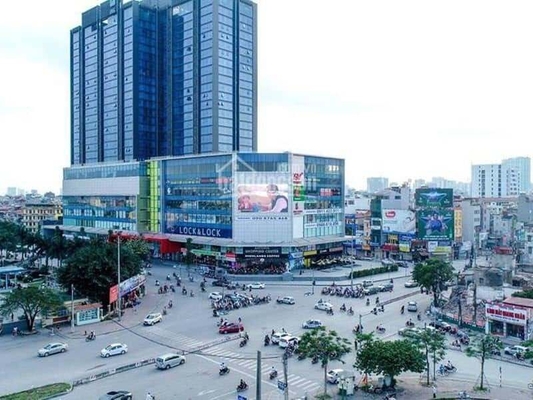
The Hanoi real estate market in 2026 is showing increasingly clear differentiation. While housing supply tends to shift to suburban areas, inner-city real estate prices remain high and cash flow becomes more selective, real estate with central locations, complete infrastructure and the ability to actually exploit continues to have an advantage. Located at 3 Le Trong Tan, Phuong Liet Ward, City. Hanoi, Artemis Tower is a multi-functional complex with office space, commercial center and outdoor advertising locations, meeting the presence and business needs of businesses right in the inner city area.

On the occasion of National Day September 2, MHL Investment Joint Stock Company respectfully announces to our Customers and Partners the holiday schedule for convenience in contacting and arranging work.
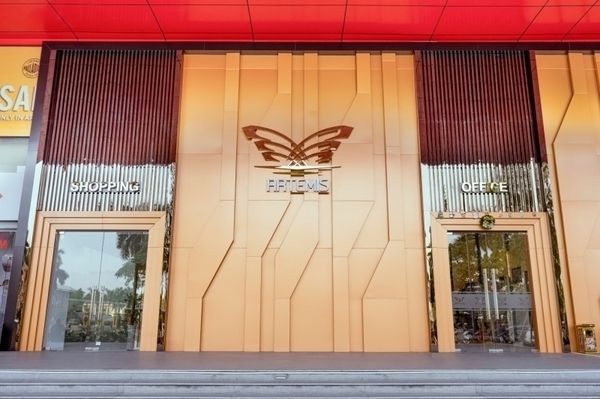
The Hanoi real estate market in 2026 is showing increasingly clear differentiation. As investment liquidity declines and the "surfing" mentality gradually gives way to more cautious decisions, real estate properties with inner-city locations, real exploitation capabilities and complete utility ecosystems are having more grounds to affirm their value. In that context, Artemis Tower at 3 Le Trong Tan, Phuong Liet Ward, Hanoi provides suitable space for businesses looking for offices, commercial space and brand promotion positions right in crowded urban areas.
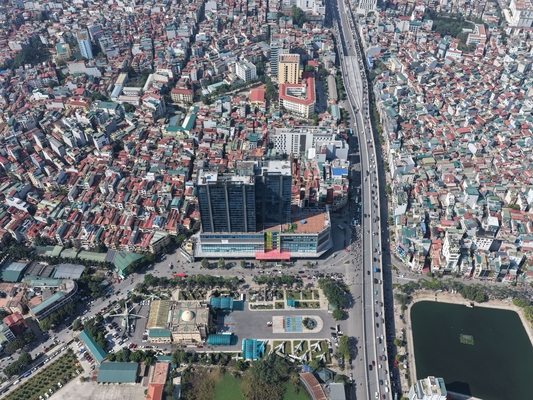
As the real estate market enters a more selective phase, cash flow no longer simply follows the expectation of price increases but increasingly focuses on location, actual exploitation ability and infrastructure connection. In that context, commercial real estate already exists in Hanoi's inner city area such as Artemis Tower - No. 3 Le Trong Tan, Phuong Liet Ward, City. Hanoi has more basis to affirm its value from its location and ability to serve real business needs.