




Blogs
LOOKING BACK AT A DECADE OF DEVELOPMENT IN THE HANOI OFFICE MARKET
Over the past decade, the Hanoi office market has seen a sharp increase in leasing supply and varied developments in each period.
Beginnings and growth
Before 2010, total office supply was about 677,000 m2. By the fourth quarter of 2020, it had grown more than 3.2 times to nearly 2.2 million m2.
The market grew in quality as well as size. In the third quarter of 2020, a Grade A building became Hanoi's first to receive LEED green building certification, a leading measure of a project's sustainability. It gave demanding tenants another option for their Hanoi headquarters and marked the start of an era in which green standards became an important location criterion for multinational companies.
More office projects subsequently announced plans to obtain LEED certification, with completion expected in the second half of 2022.
Although the Hanoi office market is still considered emerging and building classifications remain unclear, JLL has seen developers of Hanoi office buildings pay increasing attention to construction quality and tenant requirements. Raised floors became much more common over the decade, while some new buildings added air and water filtration systems to create healthier workplaces.
The Hanoi office market also expanded geographically over the decade and continues to move into new areas. Before 2010, offices were concentrated in Hoan Kiem District and nearby areas. From 2010 to 2013, supply surged in Cau Giay and Nam Tu Liem, the western part of Hanoi. Tenants moved west from the expensive city center, where office rents were high, to newly built office premises whose rents were half as much or less.

Artemis Tower
The shift west helped cool Hanoi office rents. Before 2010, Grade A rents were USD 47–48/m2/month; at the peak of the move away from the center, they were only USD 25/m2/month in the first quarter of 2015.
Rapid supply growth intensified competition among western buildings seeking higher occupancy. Keangnam Landmark 72 Hanoi was a notable example. Completed in October 2011, the 72-story building was then Hanoi's tallest and provided nearly 100,000 m2 of office space.
Keangnam Landmark 72 significantly changed the Hanoi office market. Landlords adopted more flexible policies to attract tenants, such as longer rent-free fit-out periods, extra rent-free time to reduce effective rents, and free parking spaces.
The years 2010–2015 were a period of strong growth for the Hanoi office market. Tenants had many relocation options and stronger negotiating power, creating a tenant's market. Lower rents, greater incentives and economic growth lifted net absorption over those five years to 771,000 m2, 4.3 times the preceding period.
After 2015, office supply slowed at times as developers became more cautious after rents hit a low. Some large buildings completed before 2015 struggled to raise occupancy. Lotte Center Hanoi, the Korean Lotte Group's first commercial project in the city, stood out. Its high-quality finish helped shift demand from the west toward Ba Dinh and Dong Da, Hanoi's midtown area.
Moving west had been a way to optimize rent costs, but limited infrastructure created substantial hidden commuting costs for companies there. Its central location helped Lotte Center Hanoi attract many tenants and fill most of its 45,000 m2 of leasable space within about two years. Other Ba Dinh and Dong Da office projects also benefited from tenants seeking a balance between cost and travel time.
After 2015, occupancy became more balanced geographically among three areas: the city center, Ba Dinh–Dong Da and the west.
A changing Hanoi office market
After 2015, the Hanoi office market gradually became a landlord's market. The shift was slow and only became clear when Grade A occupancy reached a record 96.1% in the fourth quarter of 2018. Tenants had rarely faced so few choices, while landlords gained more power to select tenants and negotiate terms.
The COVID-19 pandemic in 2020, however, reshaped office markets in Hanoi and worldwide. Remote work emerged on an unprecedented scale across industries. Once largely limited to freelancers, working away from a fixed office became an option for employees in almost every field.
The Hanoi office market gradually became a landlord's market.
From 2020 to 2022, JLL clients made many operational changes: rotating teams through the office, allowing remote work, reducing leased space to control costs, and moving from traditional offices to serviced offices.
Although Vietnam brought COVID-19 under control, the pandemic's severe global effects were expected to continue changing how companies use offices.
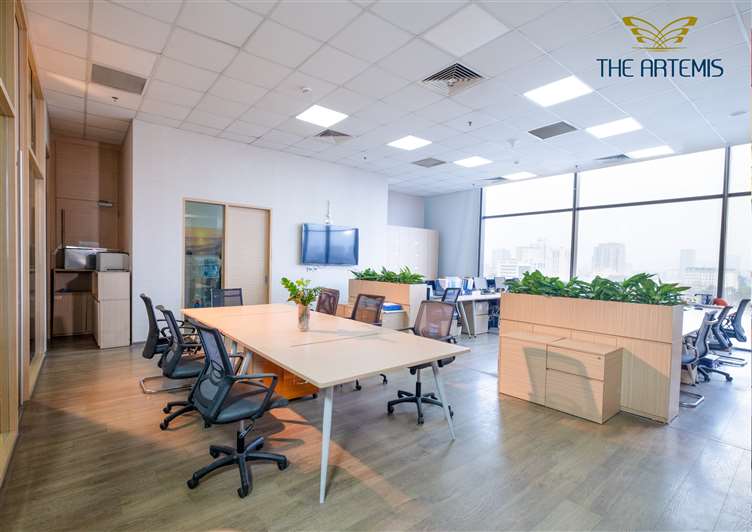
The Hanoi office market gradually became a landlord's market.
Landlords also need to keep investing in hygiene and safety to provide a safe workplace. Buildings worldwide have adopted contactless controls and other technologies to reduce disease transmission. Some Hanoi buildings, especially projects still in development, are studying these technologies for access control.
The future of Hanoi's office rental market
Future office development is expected to focus outside the center, where land is scarce. Developers will need better spaces and user experiences to compete for tenants. Green building standards such as LEED, WELL, EDGE, LOTUS and Greenmark are attracting tenants, and more office projects are pursuing certification. Certification has risen sharply since 2017; about 12 office buildings have been certified among more than 53 green buildings in northern Vietnam.
Alongside developers' green building efforts, some international office tenants are seeking green certification for their own workplaces to improve their quality.
We believe green development will drive the market in the coming years for both office developers and tenants.
Satellite urban areas around Hanoi will provide land for commercial projects, including offices, and reshape the market over the long term. JLL reports that some large property groups hold suburban land banks capable of supporting up to 1 million m2 of offices by 2030. If built, these projects will spread office density much farther across the region over the next decade.
Suburban buildings will need competitive rents to attract large tenants from the inner city seeking to save costs. Their success, however, will depend on better infrastructure and reasonable travel times from the city.
Vietnam's strategic location in Southeast Asia has driven industrial property growth. The arrival of major global companies should create healthy office demand, particularly in the capital. JLL believes the office market will remain active and offer substantial growth potential over the next decade.
Source: Van Nguyen, Northern Vietnam Market Director, JLL Vietnam
Via Economic Life
If you are interested in renting space at a Hanoi office building or shopping center and would like more information, please contact us:
Leasing hotline: 0911 422 911
Website: theartemis.vn
Facebook: Artemis Office For Lease

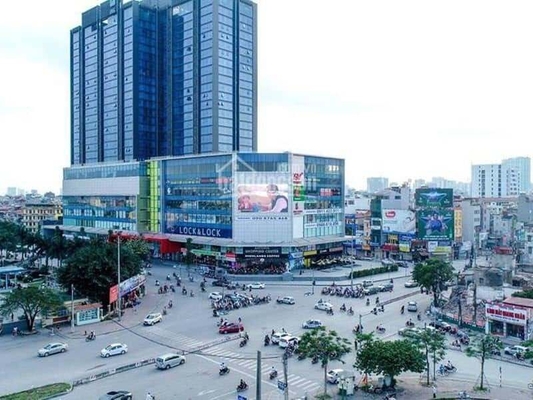
The Hanoi real estate market in 2026 is showing increasingly clear differentiation. While housing supply tends to shift to suburban areas, inner-city real estate prices remain high and cash flow becomes more selective, real estate with central locations, complete infrastructure and the ability to actually exploit continues to have an advantage. Located at 3 Le Trong Tan, Phuong Liet Ward, City. Hanoi, Artemis Tower is a multi-functional complex with office space, commercial center and outdoor advertising locations, meeting the presence and business needs of businesses right in the inner city area.

On the occasion of National Day September 2, MHL Investment Joint Stock Company respectfully announces to our Customers and Partners the holiday schedule for convenience in contacting and arranging work.
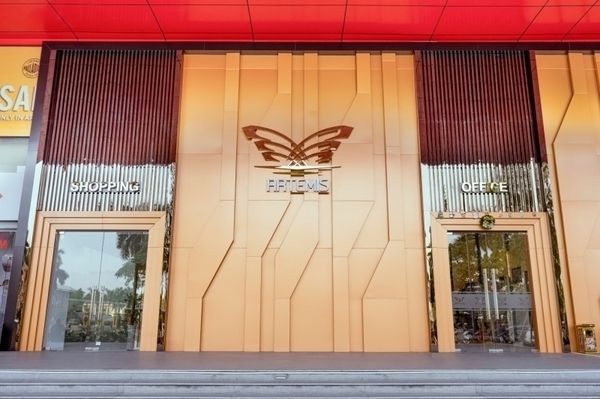
The Hanoi real estate market in 2026 is showing increasingly clear differentiation. As investment liquidity declines and the "surfing" mentality gradually gives way to more cautious decisions, real estate properties with inner-city locations, real exploitation capabilities and complete utility ecosystems are having more grounds to affirm their value. In that context, Artemis Tower at 3 Le Trong Tan, Phuong Liet Ward, Hanoi provides suitable space for businesses looking for offices, commercial space and brand promotion positions right in crowded urban areas.
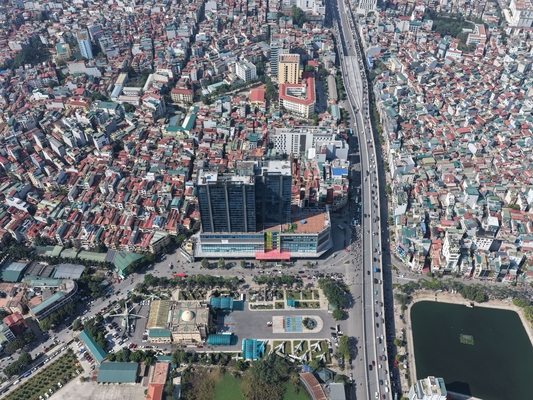
As the real estate market enters a more selective phase, cash flow no longer simply follows the expectation of price increases but increasingly focuses on location, actual exploitation ability and infrastructure connection. In that context, commercial real estate already exists in Hanoi's inner city area such as Artemis Tower - No. 3 Le Trong Tan, Phuong Liet Ward, City. Hanoi has more basis to affirm its value from its location and ability to serve real business needs.