




Blogs
Hanoi’s Low-Emission Zone Pilot: What Businesses Should Consider When Choosing an Office
From 1 July 2026, Hanoi is piloting a low-emission zone in selected areas of Hoan Kiem Ward. What does this mean for employee travel, business operations and office location decisions?
From 1 July 2026, Hanoi began piloting a low-emission zone in selected areas of Hoan Kiem Ward. The policy does not impose a blanket ban on petrol vehicles throughout Ring Road 1, but it signals a gradual shift towards tighter emissions management. Businesses should therefore reassess office location, accessibility, parking capacity and long-term operating costs.
What is a low-emission zone?
A low-emission zone is an area where transport measures are introduced to reduce air pollution. Depending on the implementation stage, authorities may restrict certain vehicles, regulate operating hours, apply emissions standards and encourage public transport or clean-energy vehicles.
The objective is not limited to improving air quality. It also supports better urban traffic management, reduces pressure on central districts and promotes more sustainable mobility.
How is Hanoi implementing the low-emission zone?
Under Decision No. 3273/QD-UBND dated 29 June 2026, Hanoi’s low-emission zone within Ring Road 1 is being implemented in phases.
1 July to 31 December 2026
The pilot applies to Areas 1 and 2 in Hoan Kiem Ward. In Area 1, all road vehicles are restricted from 7:00 p.m. to midnight every Friday, Saturday and Sunday.
Hanoi has not introduced a blanket ban on all petrol-powered motorcycles and cars throughout Ring Road 1. Measures are applied according to location, vehicle type and time period.
Roadmap from 2027
In 2027, the pilot is scheduled to expand to Areas 1, 2 and 3 in Hoan Kiem and Cua Nam wards. From 2028 to the end of 2029, the low-emission zone will cover the entire Ring Road 1 area. From 2030, Hanoi plans to maintain and further improve the model.
Why should office tenants pay attention?
Although the 2026 pilot is concentrated in central Hanoi, the expansion roadmap shows that businesses should take a long-term view of office location. A suitable office should not only be close to the city centre; it should also be accessible to employees, clients and delivery services.
Employee commuting patterns may change
As emissions requirements and traffic controls are strengthened, some employees may need to change their vehicles or commuting routes. This can affect travel time, commuting costs, employee satisfaction and recruitment.
Clients and partners need convenient access
For companies that frequently host meetings or receive visitors, an office that depends on a single congested route or lacks parking may create a poor customer experience. Multiple access routes are therefore an increasingly important advantage.
Delivery operations should be assessed in advance
Retail, e-commerce, distribution and service businesses should review building rules for deliveries, loading areas, freight lifts and vehicle access hours before signing a lease.
Six office selection criteria in the green mobility era
1. Access from multiple major roads
An office should have more than one practical access route and should not depend entirely on a frequently congested road. Connections to central districts, residential areas and major traffic corridors improve operational flexibility.
2. Accessibility by different transport modes
Businesses should assess access by motorcycle, private car, taxi, ride-hailing service, bus and cleaner transport options. Diverse mobility choices reduce disruption when certain vehicles are restricted by location or time.
3. Parking capacity that matches workforce size
It is not enough to confirm that a building has a basement. Businesses should clarify registered parking allocations, monthly fees, visitor parking, operating hours and alternative arrangements when capacity is limited.
4. Reliable building infrastructure
Air conditioning, lifts, backup power, fire safety, security and building management directly affect workplace performance. Reliable infrastructure reduces disruption and supports a professional experience for employees and visitors.
5. Flexible floor areas
A building with different office sizes allows a company to expand, reduce or reconfigure its space without changing its business address. This is particularly useful for growing companies or organisations with changing headcounts.
6. Total occupancy cost, not rent alone
Businesses should calculate management fees, VAT, after-hours air conditioning, utilities, parking, fit-out and employee commuting costs. A lower headline rent may not be economical if access is difficult or additional costs are high.
Artemis Tower – flexible office space in Phuong Liet
Artemis Tower is located at No. 3 Le Trong Tan Street, Phuong Liet Ward, Hanoi. The building connects with major roads including Truong Chinh, Ton That Tung, Giai Phong, Tay Son and Nguyen Trai, providing several commuting options for employees, clients and partners.
Artemis Tower has 27 floors, including an eight-floor podium for offices and retail. Office areas range from approximately 100 square metres to full floors of more than 4,000 square metres.
- Two basement levels and a front forecourt for parking;
- Central Chiller air-conditioning system;
- Eight high-speed passenger lifts and two freight lifts;
- Large floor plates suitable for flexible layouts;
- Integrated office, retail and on-site amenities.
As urban transport policies evolve, a location with multiple connections, flexible office areas and coordinated building infrastructure can provide greater long-term operational stability.
Plan for urban change when choosing an office
Hanoi’s low-emission zone pilot is part of the city’s broader shift towards cleaner transport and pollution control. Businesses should use this development as an opportunity to reassess office requirements rather than selecting a location based only on rent or distance from the city centre.
A suitable office should balance location, accessibility, parking, building quality, space flexibility and total occupancy cost. A comprehensive assessment at the outset helps reduce unexpected costs and improves resilience to future urban changes.
Arrange an office viewing at Artemis Tower
Businesses seeking office or commercial space in Phuong Liet may contact Artemis Tower for available areas, layout consultation and viewing arrangements.
ARTEMIS TOWER
Address: No. 3 Le Trong Tan Street, Phuong Liet Ward, Hanoi
Leasing hotline: 0911 422 911
Email: kinhdoanh@img.vn
Website: theartemis.vn
Note: The scope and implementation measures of the low-emission zone may be adjusted by competent authorities. Individuals and businesses should follow official Hanoi announcements when planning travel.
References: Decision No. 3273/QD-UBND dated 29 June 2026 and the official announcement published by the Government Portal.

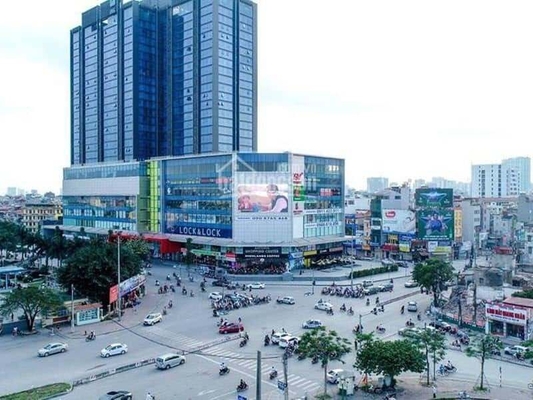
The Hanoi real estate market in 2026 is showing increasingly clear differentiation. While housing supply tends to shift to suburban areas, inner-city real estate prices remain high and cash flow becomes more selective, real estate with central locations, complete infrastructure and the ability to actually exploit continues to have an advantage. Located at 3 Le Trong Tan, Phuong Liet Ward, City. Hanoi, Artemis Tower is a multi-functional complex with office space, commercial center and outdoor advertising locations, meeting the presence and business needs of businesses right in the inner city area.

On the occasion of National Day September 2, MHL Investment Joint Stock Company respectfully announces to our Customers and Partners the holiday schedule for convenience in contacting and arranging work.
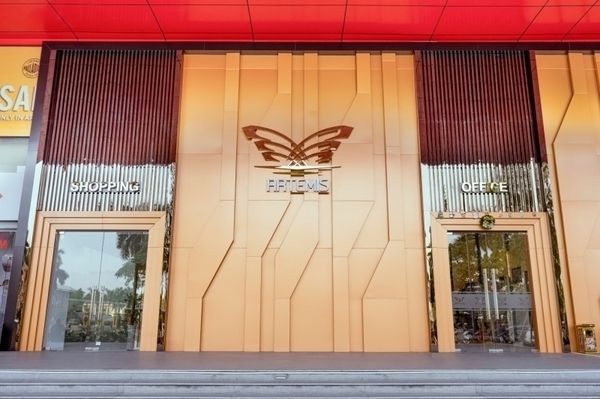
The Hanoi real estate market in 2026 is showing increasingly clear differentiation. As investment liquidity declines and the "surfing" mentality gradually gives way to more cautious decisions, real estate properties with inner-city locations, real exploitation capabilities and complete utility ecosystems are having more grounds to affirm their value. In that context, Artemis Tower at 3 Le Trong Tan, Phuong Liet Ward, Hanoi provides suitable space for businesses looking for offices, commercial space and brand promotion positions right in crowded urban areas.
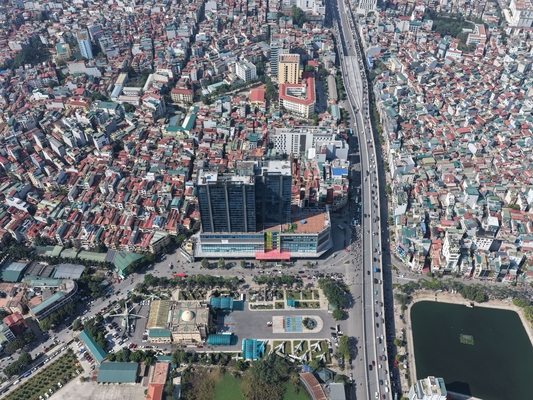
As the real estate market enters a more selective phase, cash flow no longer simply follows the expectation of price increases but increasingly focuses on location, actual exploitation ability and infrastructure connection. In that context, commercial real estate already exists in Hanoi's inner city area such as Artemis Tower - No. 3 Le Trong Tan, Phuong Liet Ward, City. Hanoi has more basis to affirm its value from its location and ability to serve real business needs.